


Is Java actually cheap? I think that is the main question when people asking when they want to backpack Java Island. The answer is A BIG YES. But only when you know where to look and what to do, in other words, only when you travel smart.
This post will dissect everything you need to know the budget in backpacking Java island.
If you are new here, ff you haven’t already, you can read my previous post about backpacking Java for the itinerary here: ULTIMATE GUIDE BACKPACKING JAVA
And for a broader Indonesian guide in here: ULTIMATE GUIDE BACKPACKING INDONESIA
Java can be incredibly budget-friendly compared to other parts of Indonesia. This is especially because of its efficient train network, affordable food, and wide range of budget accommodation. At the same time, costs can creep up depending on how fast you move and the kind of comfort you want, so setting realistic expectations early is important.
I have lived and backpacked in Java plenty of times, so trust me when I say I know the real deal. That being said, prices can vary from city to city, as Java Island has everything from a bustling 30-million-person city to a mere village. It also depends on the level of comfortability you want to get. It is a no-brainer that a more expensive accommodation will give you a more luxurious feeling than, say, a hostel.
To give a clear picture, I break down what a typical daily budget looks like when backpacking Java. On a shoestring budget, you can get by very cheaply by staying in hostel dorms, eating local food, and relying on public transport. With a bit more flexibility, a comfortable backpacker budget allows for private rooms, the occasional café visit, and organised activities. Even at the higher end, Java remains good value compared to many popular backpacking destinations in Southeast Asia.
Daily Budget Overview
Below is the budget overview of what you expect to spend while backpacking Java.
🧮 Estimated Total Cost by Trip Length
| Trip Length | Estimated Budget (USD) | ||
| Shoestring | Comfortable | Luxury | |
| 10 days | $200–280 | $300-400 | >$450 |
| 2 weeks (14 days) | $300–420 | $420-560 | >$600 |
| 3 weeks (21 days) | $450–650 | $630-840 | >$850 |
The budget above is obviously just a general guide; your spending depends on what you do and how fast you move from one city to another. On most days, you will spend around $22-25 without feeling like you are cutting corners. The trains are comfortable, the foods are excellent and the accommodations are more than decent.
🏨 Accommodation Cost Breakdown
For the accommodation, it is pretty straightforward. You would want to spend $3-7 on a hostel dorm if you are on a budget. The capsule, on the other hand, would be more expensive. The price ranges from $6 to $12 a night. However, you can also get a decent private room in a guesthouse or homestay for as low as $8-15.
Here is the typical budget for the accommodation:
| Type | Price Range (USD) |
| Hostel dorm | $3–7 |
| Budget private room | $8–15 |
| Capsule/pod hostel | $6–12 |
The accommodation price also differs from city to city, with Jakarta being the most expensive city for basic accommodation. Other smaller cities like Yogyakarta and Malang will have a lot more affordable places that you can stay in. However, no matter how expensive it is in Java, it would be far more affordable than staying in Bali with the same quality or sometimes even better.
I prefer booking online through Booking.com because of how easy it is. I have saved hundreds of dollars with their discount. By booking through the link, you can help run this blog for more travel tips!
Food Costs in Java
Food is another area where Java shines. Eating at local warungs and street stalls keeps daily food costs low. These places offer some of the best flavours in the country. A full meal often costs just a couple of dollars, and it’s easy to eat well without trying. Western food, cafés, and alcohol are available in larger cities. However, they will noticeably increase your daily spend. It’s worth balancing both depending on your budget.
🍜 Typical Food Prices
| Meal Type | Cost (USD) |
| Street food | $1–2 |
| Local restaurant | $2–3 |
| Coffee / iced drinks | $1–2 |
Alcohol is still taboo in other parts of the city and not available in convenience stores like in Thailand or Vietnam. Although it is available in larger supermarkets or bars if you’re feeling fancy for about $2-3 a bottle. I usually only go out to drink once in a while. I guess it is good not to be constantly craving for a pint of beer.
I usually find myself eating either street food or local restaurants, as it is very affordable and very delicious. However, bear in mind that Indonesians like their food spicy, and it is the default option for all the food. So, unless you do not want to burn your b***hole in the morning, ask them for NO CHILLI. Consider yourself warned.
In terms of what to eat, you’ve got literally hundreds of options to choose from with the staple dishes such as Nasi Goreng, Sate Ayam, Bakso, Mie Ayam, Martabak, and many more. As you venture deeper into the island, you will find a lot more, with every region offering their own flavour.
Transport Costs (Biggest Saver in Java)
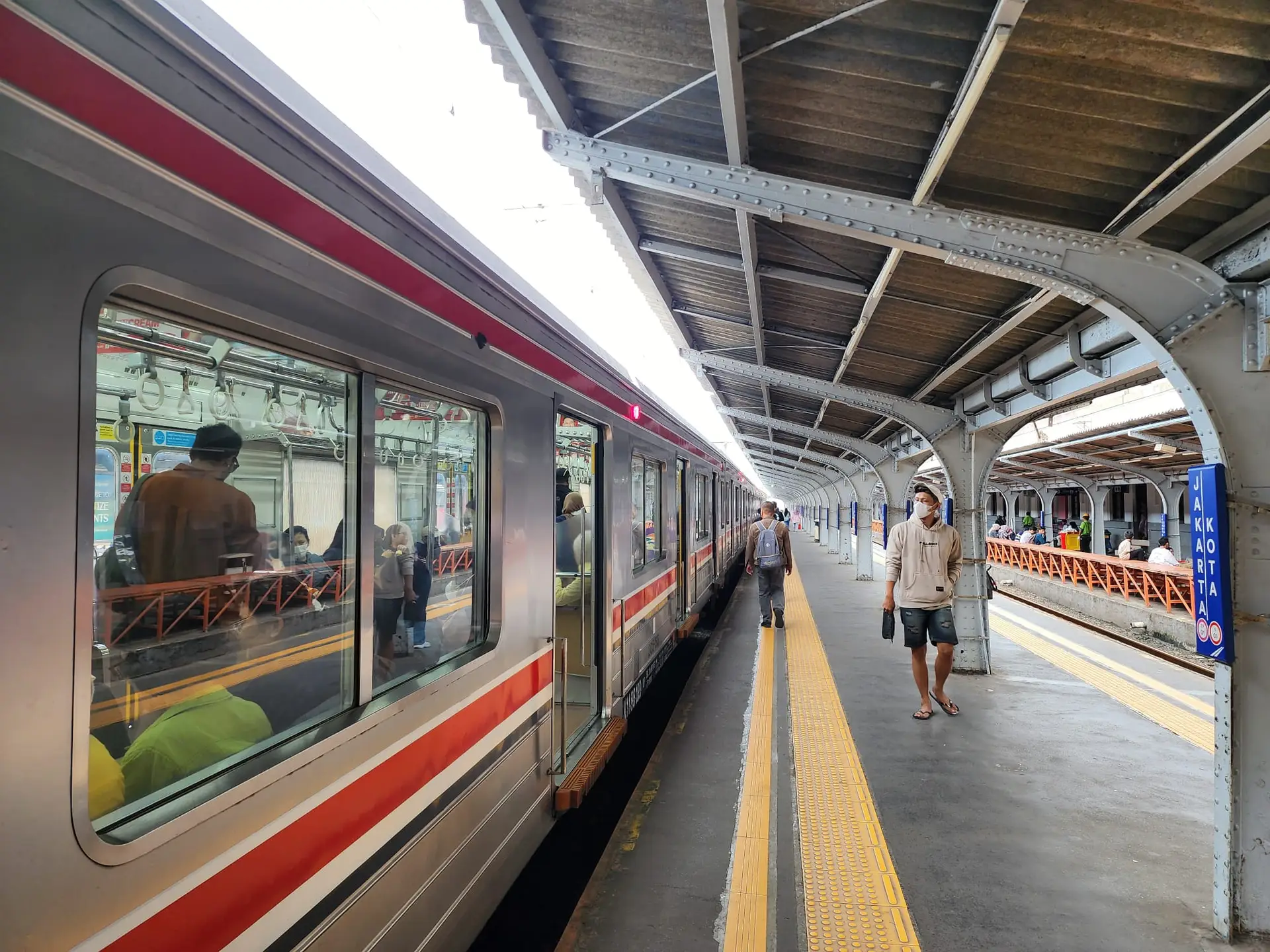
Transport across Java is where backpackers save the most money. The long-distance train system is reliable, affordable, and comfortable, making it easy to travel west to east or vice versa without flying. Local transport, including ride-hailing apps and public buses, is inexpensive. Ferries to places like Karimunjawa also remain budget-friendly if booked independently. Compared to other Indonesian islands, moving around Java is both easier and cheaper.
🚆 Transport Cost
| Route / Transport | Cost (USD) |
| Airport train (Jakarta) | <$5 |
| Economy Train | $5–20 |
| Executive train | $18-40 |
| Local transport (daily avg) | $1–4 |
The train ticket prices above, of course, differ depending on the distance and the season. Generally, the farther the distance, the more expensive it is. Booking in high season is also potentially more expensive. If following my itinerary, you might need to take 2-3 train ride. Jakarta to Bandung, Bandung to Yogyakarta, and Yogyakarta to Malang. All these routes vary in prices, the cheapest being Jakarta to Bandung that you can get a ticket as low as $3.


Activities & Attractions Costs
Let’s be brutally honest here, activities and attractions might be your biggest expenses, but only if you join a tour every day in every city you live in. As someone who despises group travel, my one piece of advice is to go get your bike and explore the attraction by yourself. This not only works well with your pace but is also much friendlier to your wallet.
Java Island has a mix of free and paid attractions. Exploring cities, temples, and neighbourhood’s costs very little, while guided tours or island trips can bump up your budget. That being said, some tours are worth the price, but many can be done independently for far less cost, especially if you are willing to plan a bit ahead.
If you’re going on a tour, check out this activity that I personally picked on GetYourGuide. They offer great experience and good value for money.
Ijen => IJEN GUIDED TOUR
Bromo Tour => BROMO JEEP TOUR
Yogyakarta, Batik Making => BATIK MAKING
Yogyakarta, Borobudur Sunrise Tour => BOROBUDUR SUNRISE TOUR


💰 Backpacking Java Budget Breakdown (Daily Average)
This is the money section 💰
To make the costs more tangible, I include a realistic example of what a normal backpacking day in Java looks like, covering accommodation, food, transport, and activities. Travel days that involve long train journeys can cost slightly more, but they are still affordable compared to flying or private transport.
| Category | Cost (USD) | Notes |
| Accommodation | $5–8 | Hostel dorms or basic guesthouses |
| Transport | $3–6 | Trains + local transport (Gojek/Grab) |
| Food & Drinks | $6–8 | Local warungs, street food, coffee |
| Activities | $3–6 | Temples, museums, tours averaged out |
| SIM, Laundry & Misc | $2–3 | SIM card, laundry, small extras |
| Total per Day | $20–30 | Comfortable backpacker range |
The budget above obviously varies depending on what you do and don’t do on that particular day. For example, in Yogyakarta, you want to do Borobudur Temple, which is $36, which includes transport and drinks. The next day you want to do something that is more affordable to offset the expenses.
There are also certain areas where you’re more likely to spend extra and others where you can easily save. Tourist hotspots, organised tours, and Western-style cafés add up quickly, while local food, trains, and guesthouses keep costs low. Understanding this balance makes a huge difference to your overall budget.
Is Java Worth It for Budget Backpackers?
So, if you ask me again if Indonesia, especially Java Island, is worth it, I remain firm. HELL YEAH IT IS. It has everything you could ask for in South-east Asia. The bustling Jakarta, the calm Bandung and Malang, the culturally rich Yogyakarta, and the stunningly beautiful Ijen. All come with a fraction of the price. With only about $20 a day, you can explore and discover the beauty this island has to offer. If you think that this post help you budget better for backpacking Java, please give it a comment and share it. Thank you.
Leave a Reply Cancel reply